
Insights from Germany: Leadership, Learning and Lessons for Pennsylvania
Strong public education systems are built through purposeful leadership, collaboration and a willingness to learn from others. For the third consecutive year, the PSBA Institute’s International Education Study Group brought together Pennsylvania school board directors, superintendents and legislators to engage with one of the world’s most highly regarded education systems. In April, a cohort of educational leaders traveled to North Rhine-Westphalia (NRW), Germany, to explore how its schools, universities and workforce partners prepare students for academic achievement and career readiness.
Throughout the weeklong experience, participants engaged in thoughtful dialogue with German educators, government officials, business leaders and higher education representatives. They visited classrooms, vocational schools, universities and globally recognized employers, gaining firsthand exposure to Germany’s educational system. This integrated approach blends rigorous academic learning with structured, real-world experience, creating multiple pathways to success and reinforcing the idea that education and workforce development are shared societal responsibilities.
While Germany’s education system operates within a different governmental and cultural context, participants recognized many familiar challenges, including workforce shortages, shifting labor market demands, rising expectations for schools and the ongoing need to ensure opportunity for students. What stood out was not a single solution, but a coherent system shaped by long-term planning, clearly defined roles and sustained collaboration across education, government and industry.
This study group emphasized reflection over replication. Participants were encouraged to look beyond specific programs to consider the underlying principles that support student success and system coherence. Across every site visit, a common theme emerged: education policy, economic strategy and workforce preparation are deeply interconnected, and progress depends on shared accountability and coordination across sectors.
The reports that follow capture the insights and reflections of study group participants as they considered what lessons might translate to Pennsylvania. Together, they offer perspectives intended to spark dialogue, inform leadership and support decision-making as education leaders continue the work of strengthening public education for students, schools and communities across the commonwealth.
Nathan G. Mains
Chief Executive Officer, PSBA
Managing Director, PSBA Institute

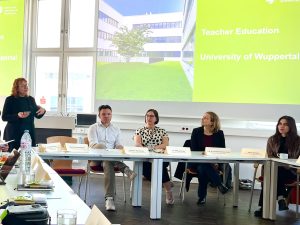
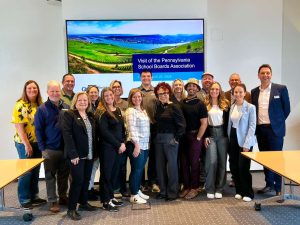

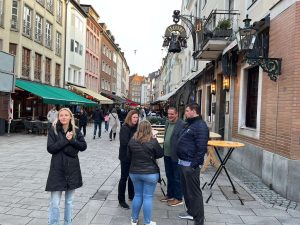




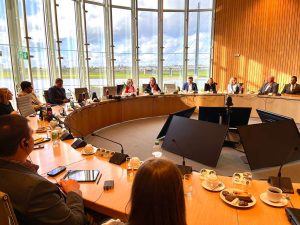
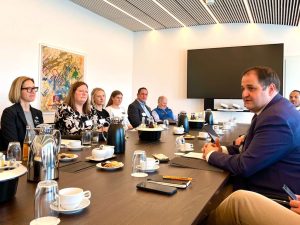




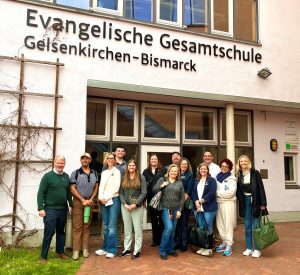
The study group focused on the educational system in North Rhine-Westphalia, Western Germany. Before traveling to Germany, participants joined several Teams calls with education, business and government leaders to hear about their systems, academic approaches and policies.
Participants spent a week touring schools and conducting meetings with education and civic leaders in Düsseldorf and other communities in Western Germany. The meetings and visits provided an overview of the German education system, including how it works, how the system achieves results, how it is funded and more, to gather ideas for adaptation and implementation in Pennsylvania school districts.
The study group visited German schools at the primary and secondary levels to understand the structure of the education system and to meet with school administrators, educators and students. They also met with German government officials, education agencies (federal and state ministries of education, city education departments) as well as other stakeholders, such as employer associations and unions that are involved in the German vocational education/apprenticeship system.
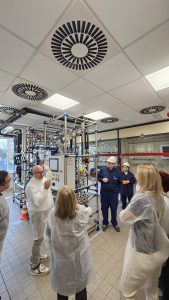
Additionally, the group toured companies/manufacturers to see on-the-job training and to gain an understanding of employers’ perspectives on the German education system. Each day consisted of three to four meetings with institutions, some of which included working sessions over lunch or dinner.
Upon their return, participants developed a report with learnings for Pennsylvania school districts to reflect on alternative solutions to common challenges and opportunities for greater collaboration. The following are brief summaries of the two main sections of the report. Read on for more content and click on the QR codes to access the full report online.
Interagency Collaboration in the German Education System: Lessons for Pennsylvania
This report examines how Germany’s education system is strengthened by a clearly defined division of responsibility between state governments and municipalities, paired with deep collaboration among external partners. Drawing on site visits and meetings throughout NRW, the authors describe a collaborative system in which states oversee curriculum, standards and teacher employment, while municipalities manage facilities, transportation and operations. Beyond governance, the report highlights how education in Germany is intentionally extended beyond the school through formal partnerships with industry, chambers of commerce, talent development organizations and STEM-focused intermediaries. Examples drawn from the dual VET system, talent scouting initiatives and MINT (STEM) collaborations demonstrate how coordinated interagency efforts expand student opportunity, align learning with workforce needs and contribute to economic vitality. The report concludes with key considerations for Pennsylvania leaders, emphasizing clarity of roles, structured partnerships, experiential learning and equity-driven access.
Common Challenges in Education: Shared Pressures, Global Perspectives
Focusing on the shared challenges facing education in NRW and Pennsylvania, this report explores two issues of particular urgency: teacher shortages and access to technical skill development. The report examines Germany’s pragmatic responses to staffing shortages, including alternative entry pathways, dual certification requirements, and strong alignment between teacher preparation programs and system needs. It also explores Germany’s business-supported apprenticeship model as a strategy for addressing workforce gaps, highlighting the role of employer investment, standardized training frameworks and cultural respect for vocational pathways. Together, these insights invite education leaders to consider how intentional system design — rather than isolated solutions — can build resilience, flexibility and long-term capacity in public education.